
Simon Pengelly - 10 things I’ve learned about design
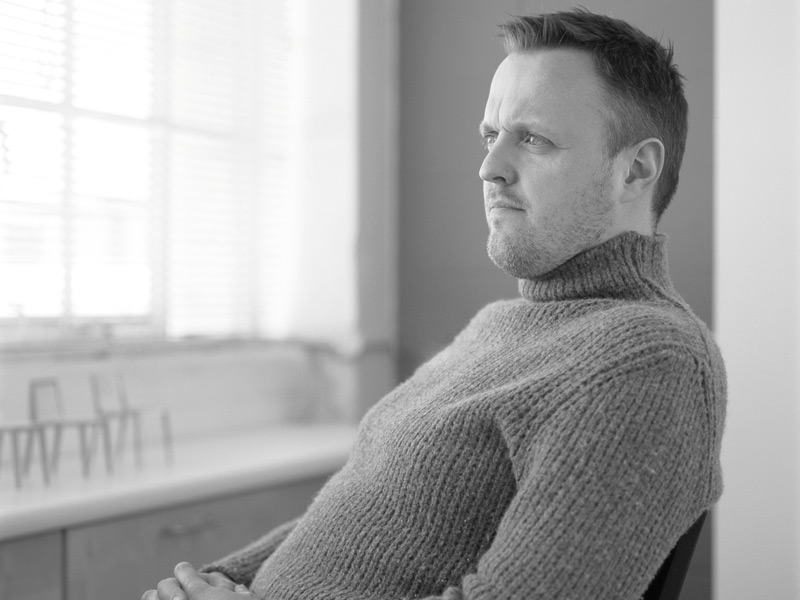
Simon Pengelly is one of the UK’s foremost furniture designers. Setting up Pengelly Design in 1993 he has worked extensively for UK and overseas furniture companies, Virgin Airlines and is currently developing his own product range, writes Pamela Buxton.

See also:
- Alex McCuaig - 10 things I've learned about design
- Colin Macgadie - 10 things I've learned about design
- Dexter Moren - 10 things I've learned about design
I will always be a specialist furniture designer
A lot of designers diversify - and I've done some lighting, interiors and products - but designing furniture is something I will always come back to. Initially I trained as a cabinet maker and thought I'd work in one-off and small batch production but was then drawn to the completely different and hugely rigorous challenge of designing for mass production. But although my designs are mass produced, they still have a craft element to them. They still have soul.
CFA Voysey's mantra of head, hand, heart is right
The head for creativity and problem solving, the hand for skill and craft, and the heart for honesty of material and function. You need all of these to create good furniture design.

Design is a very personal activity
You need to understand how people use and desire objects in order to integrate a human element into your design. All our work comes from an understanding of the human spirit.
Put your computer down and get in the workshop
Understanding making is critical to how you design and there is no substitute for practical experience. Making connects us with ourselves. It teaches you how to manipulate materials, how materials respond to techniques and processes, and which materials are appropriate for each use. By understanding how things are put together and by working with the materials and processes rather than against them, you can really start to push their boundaries and understand how to go about a design. Otherwise, you're just spitting in the wind!

Experience and age is an advantage
Design must be one of the few professions where this really is the case. Design is about playing the long game rather than being an instant name with a one-hit product. Designers whose work is timeless, rather than defined by a particular moment, are just as relevant whether they are in their 60s or 70s or 20s or 30s. The older I get, the more I realise how much I don't know. You're always still learning and that's what keeps it interesting.
Don't have a signature style
I've spent a lot of time trying not to have a signature style because, for me, the client's DNA is more important. In some ways, this has slowed down my career because I've always shunned the idea of design celebrity and have instead done things in a quiet way, which takes a lot longer - a choice that required a lot of support and patience from my wonderful wife Teri, as for the first 10 or more years it was very hard financially. I value a still, quiet design with humanity and simplicity, one that is without pretence or ostentation. Rather than embellishment, everything is there for a reason and this underlying purpose can enrich a design. I think of it as furniture that continues to give. Quiet design has a much wider application than loud design so actually gives you more influence in the long run because you sell much more.

Design needs pragmatism and compromise
Compromise is often seen as a negative, but for me there is a right amount of compromise to be reached - one that results in realising a product with integrity that pleases everyone. There is no single formula - sometimes you just get that feeling where you just know that it is right, without really knowing why.
Don't always look to move on to the next technology
Instead, get the best out of what's here already and reinterpret it. Familiarity is a huge part of what we try to integrate into our work. As a result, our work is innovative without showing off its innovation. In the Dim Sum rocking chair for Montis for example, we reinterpreted familiar rocking chairs in a quietly innovative way to produce an upholstered easy chair that rocks.

It's better to have just a few fantastic clients than many more who aren't.
We've worked a lot with Hitch Mylius, Modus and Allermuir in the UK and overseas with Montis, Arper, Lapalma and Foscarini. It's about really understanding them and where they want to be, and interpreting that through design in an appropriate and honest way, and with passion and humanity. The value of design isn't just about the bottom line, but what it says about the company and how that can bring them on in their market. We're fortunate in that we get approached now quite a lot, rather than having to do all the approaching ourselves.
Enjoy what you do
If you don't, it shows in the design.