
Schools - Access to the arts
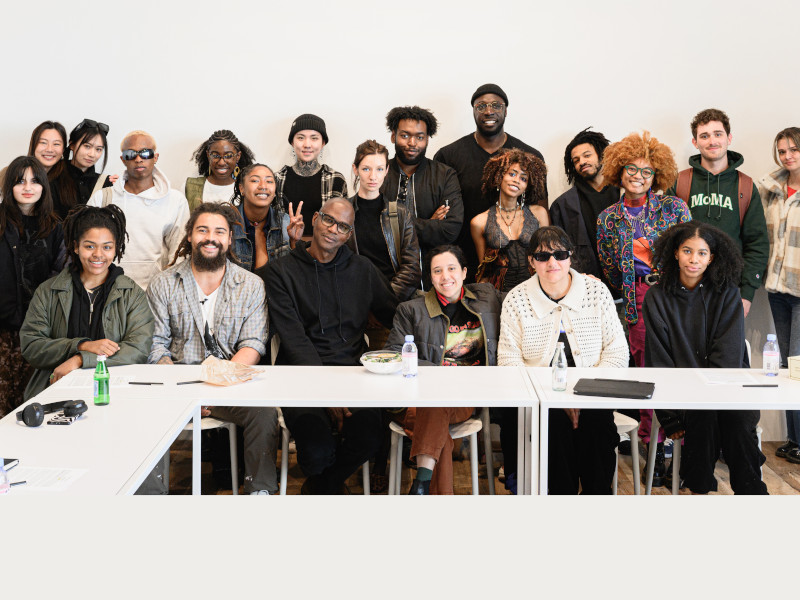
As austerity and short-sighted governments extinguish opportunities for creative participation, some resourceful individuals and institutions have found ways to open up access for all. By Veronica Simpson

ON A RECENT visit to one of my favourite Nordic cities, Helsinki, unexpected delights were encountered at the Amos Rex Museum, a striking contemporary art gallery excavated beneath an Art Deco cinema. I was surprised to see a much younger range of visitors filling its subterranean halls: most were under 30, many were teenagers, and they weren’t school groups. They paid close attention to the assorted works, from chairs wearing velour jumpers the arms of which enfolded you in a hug, to skilled and perceptive oil portraits and video work. All of it was impressive. But more impressive was the fact that the 50 artists in the show were aged 15–25.
 The building’s generous-sized entrance foyer. Image Credit: Paul Karalius
This was the latest iteration of Generation 2023, a tri-annual festival of young Finnish talent. The call out goes to secondary schools and art schools across this city of just 630,000 residents, inviting responses to a theme of the curator’s choosing. There are also grants to support applicants, including offers of residencies and studio spaces. In 2023, there were over 1,000 applicants, whittled down to 50 for the final show. And in the first four months there had been 65,000 visitors, with 10,000 of them under 18 (and the majority under 35).
While I marveled at the work and the platform these youngsters had been given, it provoked depressing comparisons with the scene back home in the UK, where the provision for arts education has never been worse – at least not in the past half century. A January 2023 Guardian article spelled out the gloomy figures: since 2010, enrolment in arts GCSEs has fallen by 40% and the number of teachers by 23%. This dovetails with strategic demotion of arts and humanities subjects, since the Ebacc qualification was introduced by former education secretary Michael Gove in 2010. It excludes all arts subjects, and the scores it generates also form the yardstick by which schools are judged in the performance tables. Small wonder that head teachers slash arts subjects first – more materials and spaceintensive than other subjects – when trying to find a way to stay afloat.
As always, the Finns are doing it so much better. This is a nation that even teaches primary and secondary school kids the rudiments of architecture, the better for them to understand how the built environment impacts on them and what good design looks like.
Culture is good for you – learning how to express yourself through art, design and music is good for your mental health, building resilience, empathy and community. That’s why the City of Helsinki this year launched a programme called Culture Kids to try and heal the rifts caused in education and socialisation for new parents whose babies were born during the pandemic: all children born in and after 2020, and their parents, are being hosted at free, specially programmed events in museums and galleries twice a year until they start school (aged seven). Which makes one doubly critical of governments that have deliberately or recklessly reduced access or completely wiped it off the curriculum.
However, there are a few initiatives to give us hope outside of Finland. One of the most remarkable in the UK is a state secondary school designed to cultivate the next generation of orchestral performers. The Shireland CBSO (City of Birmingham Symphony Orchestra) academy opened its doors in September 2023, in the hope of addressing the dwindling numbers of children who go on to study music professionally. Interviewed by Tom Service, presenter of BBC Radio 3’s Music Matters (broadcast 28 Jan 2023), the new school’s principal, David Green, said: ‘I see this as an existential issue not just for the CBSO but all classical and orchestral music infrastructure in this country: that unless we can make a sea change in interest in classical and orchestral music within the state sector… there won’t be orchestras in the future.’
 Thomas J Price’s Getting to Know event at Hauser & Wirth in downtown Los Angeles. Image Credit: Paul Karalius.
What Green is referring to is the widespread disappearance in state schools of subsidised lessons or access to instruments and opportunities for music-making. Currently, only private/independent school pupils receive the kind of tuition, coaching and encouragement on musical instruments that used to be available across the board. This is catastrophic for our music culture, as Green says: ‘The 7% of students who go to independent schools will not be enough to provide all the musicians, all the audiences, all the admin staff and all the donors of the future.’
Green intends this new school to alleviate that problem, at least locally: ‘The CBSO’s commitment is absolute and long term. The point here is that music is plumbed into the DNA of the school from the start. It’s in the name, so we can plan with a confidence, which is not usually possible in our learning work.’
He is also hoping that the impact of this music-centric curriculum in the school will prove, beyond doubt, how important a strong music and creative culture is in building happy, healthy individuals. He says: ‘Music teaches some really important skills – selfdiscipline, empathy, teamwork. It may not be the case that every child that comes here ends up working and playing in the students’ orchestra, but music is such a powerful vehicle for supporting children with their wider education and being successful in their lives beyond the school.’
The importance of creative learning, of inspiring and encouraging curiosity and critical thinking is so obvious in the minds of all those featured here. It inspired the renowned Ghanaian artist Ibrahim Mahama – who has exhibited all over the world, including several times at the Venice Biennale – to invest the profits from his own sales back into building spaces for culture and creative education in his home country. It has also inspired global gallery Hauser & Wirth to embed a comprehensive learning, teaching and mentoring programme across all their sites. When asked why the creative arts are so vital, Debbie Hillyerd, global director of education mentions artists’ ‘existential ability to see change and create solutions’.
She says: ‘Learning is about seeing the world through as many different lenses as possible. We all have a responsibility to contribute to that ecosystem. Learning to look at art teaches you visual literacy, to think about different problems, to feel and empathise.’
Over its nine-year gestation, Hillyerd has witnessed the programme’s positive impacts. She says: ‘Of the children who were in my first youth group in 2014, one is now working at the White Cube, and there are students who now work at our galleries. The key thing is that all our alumni out in the art world have had a real, quality grounding in the business.’
CASE STUDY - CBSO SHIRELAND
 The state secondary school is designed to cultivate the next generation of orchestral performers. Image Credit: Paul Karalius
In September 2023 the doors opened onto the UK’s first school to be established in collaboration with a world-class orchestra. In a radical new approach to music education aimed at cultivating the next generation of orchestral musicians, City of Birmingham Symphony Orchestra (CBSO) joined forces with Birmingham’s Shireland Collegiate Academy Trust to create the Shireland CBSO Academy.
From its initial Year 7 intake, the academy will eventually accommodate 750 secondary students with an additional 120-strong sixth form. And music will be at the centre of the school – in its curriculum as well as the architecture, given the three-storey concert space that has been shoehorned into what was previously a five-storey corporate atrium of a 1980s BT office block.
ADP Architecture has had the privilege of masterminding this unlikely retrofit, to the usual Department of Education budgets and space restrictions. But it has – quite rightly – prioritised the concert hall, working together with acoustic consultants Hoare Lee. As project architect William Allen says: ‘The usual assembly hall approach would be a box, but you need more resonance for music, and that means more angles to improve the acoustics.’ This one makes the most of its three-storey height along with an irregular shape – the hall expands sideways at ground and first floor levels – angled glass balconies along the second floor gallery, and grooved timber panels that line strategic walls. Softened by the upholstered, fixed seating that rakes up the rear wall, its resonance is designed to suit a wide range of music, which the principal David Green hopes will reflect the diversity of its catchment area, in Sandwell.
Turning an existing office block into a school is highly unusual, though the architects have made it work in the school’s favour where possible. The original atrium’s faceted glass roof now adorns a spacious, double-height library that sits on top of the slab that has been placed at third-storey level, above the auditorium. Classrooms and practice rooms surround the hall on every level, enjoying ample daylight from the extensive exterior glazing (though brise soleil have been placed on the southerly side). Wider than usual corridors around the concert hall facilitate social interactions and encounters as pupils move between floors, and its faceted shape and bold, red and black door architraves reinforce both wayfinding and its symbolic value to the school.
Equally important is the building’s welcome to the wider community, who will be invited to a full programme of concerts throughout the year. So a generous entrance foyer leads directly to a box office as well as the concert hall, while the school’s ground floor dining facilities can be opened up for events and receptions.
Client CBSO and Shireland Collegiate Academy
Architects ADP Architecture
Acoustic consultant Hoare Lea
Completed September 2023
CASE STUDY - HAUSER & WIRTH
 A Hauser & Wirth workshop in Menorca accompanied a Christina Quarles exhibition. Image Credit: Paul Karalius
Connection with audiences is not the first priority you’d imagine for the globally dominant commercial gallery brand Hauser & Wirth, with its starry line-up of top-earning artists, from Louise Bourgeois to Martin Creed. Yet from its beginnings in 1992, operating out of a Zurich apartment, it now threads art education and engagement into the programme for all locations: London, Hong Kong, Zurich, Menorca and Los Angeles. However, it all started in Somerset in 2014, when the power couple behind the brand, Iwan and Manuela Wirth (née Hauser), opened a gallery in Bruton, where they mostly live.
Debbie Hillyerd, now global director of education, launched the initiative then with three principle aims: to engage communities, enrich academic programmes and improve access to art careers.
The gallery formed relationships with the five schools on its doorstep, developed free resources for teachers and learners and the wider community, and quickly expanded these to schools and audiences across the region and now across the globe, pivoting from the artists and exhibitions occurring in the regional locations.
Each exhibition is accompanied by additional lectures, workshops, interactive seminars and screenings. But there are also strands addressing specific communities or institutions such as the Education Labs – teaching programmes devised for local schools and universities run at the galleries in Menorca, Somerset and Los Angeles, where they have dedicated education facilities on site. Where those are lacking, in the more urban galleries such as London and New York, they form partnerships with local schools, universities and institutions to deliver something tailored to their needs.
 Education Labs are teaching programmes devised for local schools and universities run at the galleries in Menorca, Somerset and Los Angeles. Image Credit: Paul Karalius
What makes the H&W workshop programme stand out is the access to their artists. Activities for Somerset’s weekly Arthaus group, comprising local 15-to 19-year-olds, have included action painting with M artin Creed or studio visits to meet Matthew Day Jackson and Bharti Kher, or collaborative film-making with John Wood and Paul Harrison. The New York gallery recently teamed up with a local charity working with young adults in foster care, inviting them to meet artist Mark Bradford, attend workshops and then give talks within the gallery during his exhibition. The programmes are devised to encourage youngsters to see the potential in a whole host of creative careers, rather than try and turn them into artists. Budding architects are also encouraged through various schemes, including a UK summer school programme, run in conjunction with Niall Hobhouse of Drawing Matters, inviting sixth-form candidates for a free residential summer school in Somerset. Last year, there were 50 candidates on fully paid places, with support coming from UK architecture practices as well as Hauser & Wirth.
CASE STUDY - MASS AND TURPS BANANA
 A Mass students show at Thames-Side Studios. Image Credit: Paul Karalius
Launched as a magazine in 2005, Turps Banana was originally a vehicle for two disgruntled painters, one of them Marcus Harvey, to share their passion for a medium they felt was being unfairly marginalised. Gaining a groundswell of support among other disgruntled painters it turned into an artist-led masters programme run out of meanwhile space in Elephant & Castle. Now run by Harvey and Helen Hayward, it continues to offer peer-to-peer mentoring and tutoring at a fraction of the price of the usual art schools.
In 2021, a sister school (and magazine) dedicated to sculpture was launched, called Mass, led by artists Nicky Hirst and Ian Dawson, which now supports a community of over 20 artists at various stages in their careers, based either in their own studios or at its HQ in Thames-Side Studios, a light industrial estate in Woolwich. Here they have access to adjacent (but independent) exhibition space, sculpture workshops, reprographics, photographic studios, woodwork facilities and a print shop. There are seven studios of around 175ft2 at this site, with access to a kiln.
Always artist-led, the scheme offers way more contact and enrichment than is now typical in some of the ‘leading’ UK art schools. The current offer comprises: one-to-one tutorials with a dedicated mentor at five scheduled points throughout the year; group crits; opportunities to attend ten artist talks and afternoon seminars with the current Turps or Mass cohort as well as the benefit of being part of a professional network of current and past peers and mentors.
The studios cost £2,750 for a year, and the Mass fees are £3,000, which cover the cost of running the programme. Many people sign up for one year and stay for three – or more – enjoying the access to a range of workshops and a ready-made artist community.
Students still have to apply for selection. Says Hayward: ‘We look at people’s work and how it would interact with the programme and with other people. We choose based on what you are doing and where you are at – not on the quality of the work alone. It’s making sure the mix is right.’
 The buildings are designed to minimise the need for electricity, instead maximising daylight and ventilation through the optimal arrangements of skylights and windows. Image Credit: Paul Karalius
In 2023, Turps launched a new off-site programme run from Hastings by Matthew Burrows, and aimed at painters with studios around Hastings, Brighton, Tunbridge Wells and Rye.
CASE STUDY - IBRAHIM MAHAMA’S RED CLAY STUDIOS
When you see something that needs doing, there’s nothing like being able to raise a spare million or two to sort matters out. Luckily, as an established star of the global contemporary art scene, Ghana’s Ibrahim Mahama was able to put his hands on the $1m required to buy six decommissioned planes for his Red Clay Studios arts hub and technology education campus in Tamale, northern Ghana, which opened in 2020. These he has now repurposed as classrooms, arranging for free lessons to be given in physics, computer science, basic engineering and creative thinking for local schoolchildren. Mahama also funds the buses that bring them – and their parents – to the facility to see what’s on offer (there’s nothing like recruiting parents to your mission early when opening up children’s horizons). The studios are packed out during the school term – as many as 2,000 pupils a week – and the planes are also used for film screenings. Mahama estimates that Red Clay Studios has around 100,000 visitors a year.
The reuse of industrial equipment to inspire new inventions is both poetic and appropriate, given that Mahama has made his name by using salvaged colonial-era materials (from jute cocoa sacks to decaying school furniture) to create his own architectural-scaled installations that interrogate the political ambitions and failures of past governments.
And so far, most of the proceeds from Mahama’s work have been reinvested in the blossoming arts education infrastructure he has in mind for northern Ghana. It was with his first sale – to Charles Saatchi, in 2014 – that he decided to convert any profits into a building, on land that his father had set aside for him in Tamale. Originally intended to be his studio, that building turned into the two-storey Savannah Centre for Contemporary Art (SCCA), completed in 2019, an exhibition and research space that showcases new artists but also those from Ghana’s past whose collections and reputations were in danger of vanishing due to lack of institutional archives and resources. He says: ‘There was a gap in the system that needed to be filled. There were no institutions for the younger generation of Ghanaians to connect to the work of older generations – in engineering, architecture, textiles.’
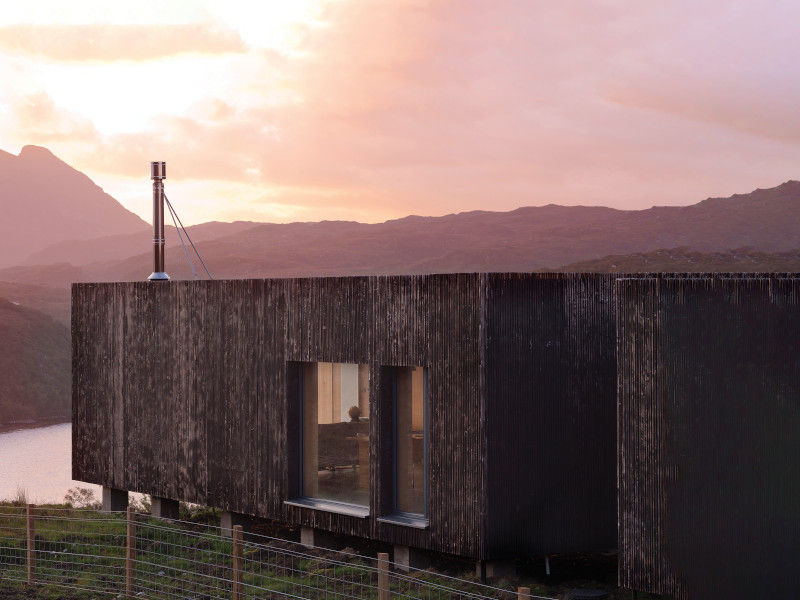
All of his buildings are designed to minimise the need for electricity – a very unreliable resource in Ghana – instead maximising daylight and ventilation through the optimal arrangements of skylights and windows, and are mostly constructed from local, sun-baked clay bricks.
Mahama credits his tutor, Professor Karî’kachä Seid’ou, at Kwame Nkrumah University where he studied for his BA and MFA, for the original inspiration. He tells FX: ‘He is a Marxist and he always talked in class about the way art needed to go beyond the idea of the object. We needed to find ways in which we could disseminate art. It’s not so much about what you produce, but about the relationships that are created in the process when the object comes into being. That’s where my interest in building institutions and communities came from. If you say you are an artist and you want to make or create something, does it have to be a commodity that someone has to buy, or can it be more like a community or an institution that can disseminate art a lot further?’
CASE STUDY - MATT + FIONA
 Brixton House is a co-working cafe, artist and theatre space. Image Credit: Paul Karalius
From their beginnings in 2016, the design education entity that Matthew Springett and Fiona MacDonald devised, Matt + Fiona, has prioritised giving children and young people the chance to actually build, not just design, their own structures, figuring there is no better education than hands-on making. Says MacDonald: ‘Our approach recognises that children and young people have something to offer, and to learn, at every stage of the process of making buildings and shaping places.’ In April 2023 they realised their most ambitious scheme to date, within the confines of Brixton House, a co-working cafe, artist and theatre space, which commissioned this Matt + Fiona project before the pandemic. Over a five-day build period in the Easter holidays, a cohort of 8–11-year-olds from four local schools set about visualising, designing, then making models for a temporary, demountable performance space.
 A cohort of children from four local schools set about visualising, designing, then making models for a temporary, demountable performance space. Image Credit: Paul Karalius
Dropping in to the workshop, there was a cheerful buzz in the room – all participants fully engaged and focused; you could see 8-year-old girls confidently wielding cordless drills as they screwed pieces into place, helped by their friends, all of them clearly galvanised by learning how to measure, cut timber and create complex frame structures, taking individual responsibility for specific areas, while also working as a team.
The completed interlocking timber and plywood structure is colourful, fully accessible and interactive. It was used for the following few weeks for local school assemblies, storytelling sessions, monologues and art installations. Brixton House is now looking to find a local school, youth group or community organisation to give the structure a permanent home.
Matt + Fiona’s social enterprise has now expanded into three strands: Build, Learn and Connect. The above workshop is a classic Build project. Learn is a programme for training teachers, youth workers and students to run similar hands-on making course, via workshops and continuing professional development (CPD) sessions. Connect is aimed at assisting local authorities, developers and placemakers in engaging with young and local people in the shaping of their neighbourhoods.
 A cohort of children from four local schools set about visualising, designing, then making models for a temporary, demountable performance space. Image Credit: Paul Karalius
The Matt + Fiona social enterprise is supported thanks to long-term funders, Jestico + Whiles and Buro Happold. Individual projects have to find additional sources of funding, and the Brixton House initiative was supported by 145 backers through Spacehive Crowdfunding, a pledge from the Mayor of London’s Crowdfund London campaign, and a grant from the Co-operative Foundation.