
Profile - Tim Pyne
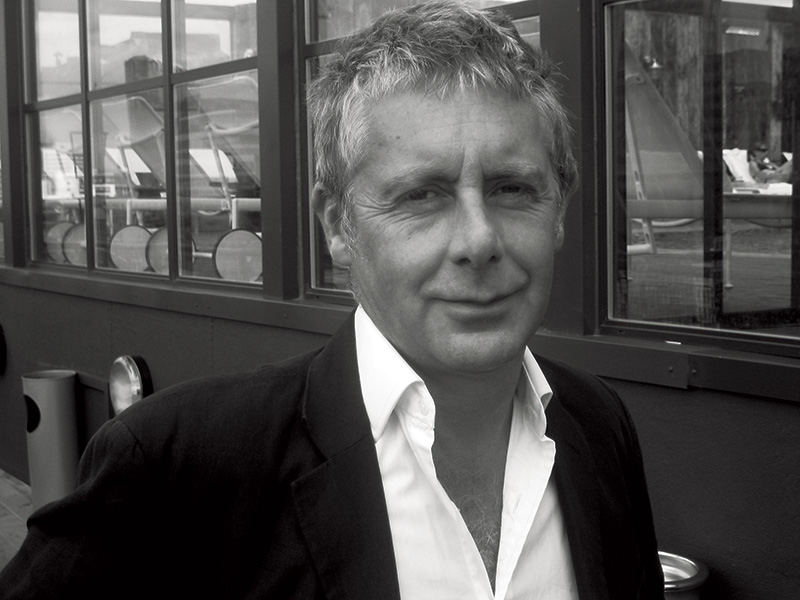
Tim Pyne, the self-described ‘half architect, half ad man’, discusses the origins of 100% Design and his most recent project, a forum where the property world swaps ideas on cutting carbon emissions.

Words by Emily Martin
LAST SUMMER, an archive FX front cover was unearthed. It was from the April 1999 issue and, like lifting a lid from a time capsule, it showcased a different magazine and industry during very different times (and, I might add, a different editorial staff). The cover features architect Tim Pyne, among other male designers, recreating Jimi Hendrix’s Electric Ladyland nude album cover at the time Pyne was finishing his exhibition work at the very much hyped Millennium Dome. 100% Design, which he had helped create in 1993, was also entering its sixth year. ‘That was the way it was,’ he says of a ‘rock ‘n’ roll’ period. ‘We were in Shoreditch having the time of our lives.’

Illustrators LE GUN, with Paul Hamilton as art director, produced these illustrations that were enlarged and plastered across Estate Office buildings as a way of promoting the brand

Illustrators LE GUN, with Paul Hamilton as art director, produced these illustrations that were enlarged and plastered across Estate Office buildings as a way of promoting the brand

Illustrators LE GUN, with Paul Hamilton as art director, produced these illustrations that were enlarged and plastered across Estate Office buildings as a way of promoting the brand
Meet Pyne and you’ll quickly realise he isn’t your typical architect. A graduate from the Liverpool School of Architecture, he describes himself as half architect, half ad man. He is the founding director of Footprint+, the UK property event for a zero-carbon future. But his CV also includes being founding creative director at both 100% Design and Detail in the UK, Tokyo and Moscow, and his company, Work, through which Pyne designed some £50m worth of the Millennium Dome interior, winning RIBA awards for two of the four zones created. He has also worked as creative director to the London Boat Show, the London Motor Show, the Blenheim Fashion Group and DMG Worldwide. He designed London Fashion Week for a period and launched Concept House at The Ideal Home Show, and was a founding partner of the Vamp creative event and party organisers. Before that he worked as an associate at Jasper Jacob Associates, running several large private and lottery-funded museum and visitor attraction projects.

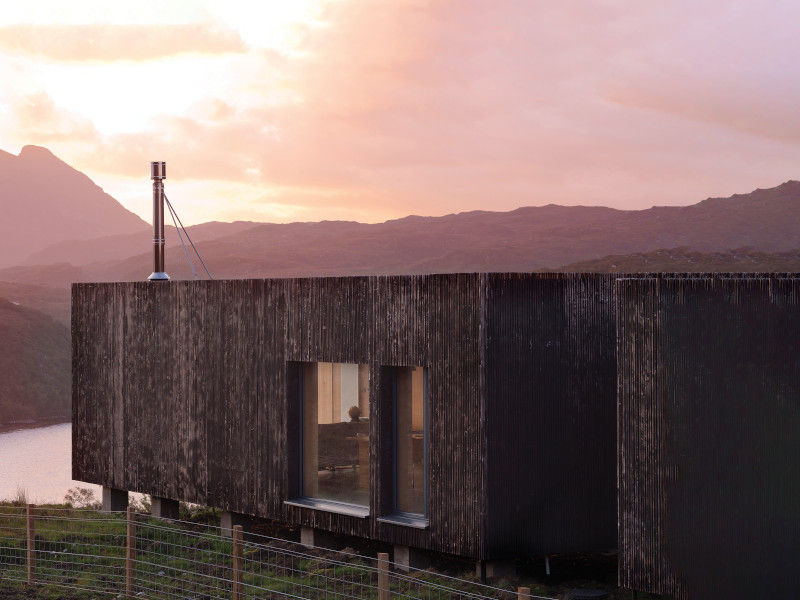
m-hotel came out of the m-house project; rooms built off-site and craned into place. There was the possibility that it could be demounted after a while, so it could be located on sites available on relatively short leases
‘Although I did architecture I was very interested in communication,’ he explains. ‘I got really interested in how people tell stories [and] the delivery of people who could actually capture an audience. So I spent a lot of time watching people in meetings and some of them could just hold the room.’

m-hotel came out of the m-house project; rooms built off-site and craned into place. There was the possibility that it could be demounted after a while, so it could be located on sites available on relatively short leases
He describes exhibitions as a cross between advertising and architecture and the sector suited him well – each exhibition is designed to tell a story while essentially setting a built advertisement. Landing the 100% Design job, Pyne recalls putting on a show like no other, and describing the market as ‘shabby chic’ as opposed to contemporary. As he saw it, the way to set up a new show promoting contemporary furniture was to create the ‘biggest party in London’.
 m-house (pronounced ‘mouse’) was a 2002 prefab project. It was over 1,000ft2 of contemporary house or office manufactured under controlled factory conditions, which guaranteed both quality of build and delivery time. It arrived in two pieces, each 3m wide, which were then joined together on site, which took about a day.
‘Let’s put a big bar in the middle and make it into a party,’ he says of his intention at the time, ‘because the other thing was that designers didn’t used to go to shows. They used to sit in their offices and wait for salespeople to come and sell to them… It [will be] the “Design Party”, and then while they’re getting drunk at the bar, they’ll be wandering around and they’ll see the exhibition stands and they’ll start to see contemporary furniture.’
In 1993, 100% Design was launched and by its second year it was seeing visitor numbers at around 25,000. It was a fresh and exciting approach to working in the design industry that linked design, work and a huge social event together in one place, which proved particularly attractive to cash-strapped young designers.
 The Millennium Dome’s Living Island Zone, which was set in Britain’s seaside. The idea came from the Paul Theroux novel Kingdom by the Sea, where he described how island nations throw their rubbish towards the coast
‘They were people like Michael Young [among others] – all these people that I now see in the Design Museum as being the doyens of design,’ says Pyne, who gave them exhibition space in return for exhibition design: ‘They were working out of their mum’s living rooms, and so they all came in and made stuff for the show. We gave them a showcase [which launched careers], so it was a really, really rewarding. Probably the most rewarding thing I’ve ever done, actually, is to provide that showcase.’
A sailing trip, a family, and a move to St Lucia followed over the next ten years. Before moving back to the UK Pyne survived Hurricane Maria, a deadly category 5 storm that devastated parts of the Caribbean in September 2017. He moved to Hove; the pandemic hit shortly afterwards, while Pyne was in the throes of establishing Footprint+, with its focus on reducing carbon within the property and interior sectors.
‘I ended up going to a couple of meetings with some architects who said, “oh, we’re trying to reduce our carbon footprint of our buildings, but we don’t really know how we’re doing it, how to do it”,’ he says. ‘But at the same time, they were buying tickets to go to MIPIM. I worked out it was 65,000 tons of carbon to fly the UK property industry down to the Mediterranean to talk to each other. So I said, “OK, well, let’s do it on the lawn in Hove. Let’s build a big marquee like we did 100% Design. Let’s make it into the party… and let’s find the cleverest people in the UK to come and tell the property industry how to reduce its carbon footprint”.’
 Footprint+ is the UK property event for a zero-carbon future
And Pyne did so with great success, with the event having to move to a new home in Old Billingsgate to be among the big decision makers. At the next event, in May 2025, themes and issues around construction and interiors waste – and its effective reuse options – will continue to dominate.
While a far cry from the partying, ‘rock ‘n’ roll’ days of nude magazine covers – which I can’t deny is a relief – Pyne, nevertheless, as an architect and ‘ad man’ knows how to bring an industry crowd together.
‘I wouldn’t even know how to start designing a building like Richard Rodgers has just done in the middle of London!’ he muses. ‘But what I can do is go and talk to a client and come up with an idea for them and build it. And it’s there for as long as it needs to be, to tell the story. Then it all disappears again.’