
Olympics - After the Parade
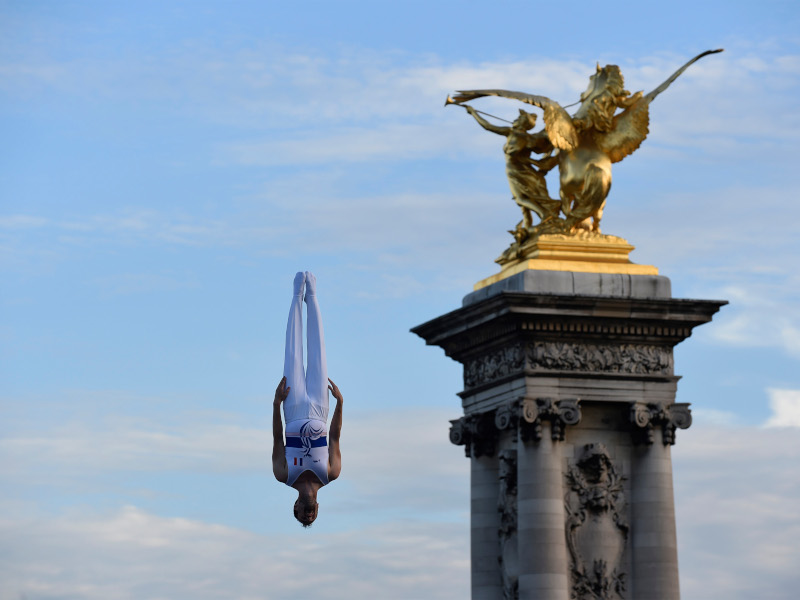
What happens after the summer Games has passed through town? Stephen Hitchins looks at London and Paris to see the infrastructure legacy left behind.

HISTORY BEGINS where memory leaves off. It’s been over a decade since Danny Boyle’s spectacular opening ceremony for the London Olympic Games kick-started an unforgettable summer – one magical fortnight, our recollections of that golden time still vivid, the pessimists proved wrong for once, sceptics and doom-mongers defied. Some of those memories will always be indelible; memories fade, buildings remain, the rest is history.
 Dominique Perrault Architecture designed the site of the Olympic and Paralympic Village for the city. Image Credit: Dominique Perrault Architecte
Olympic cities enter an alternative world, one where barriers are set up, entire streets are deleted from the map, and traffic speaks in quarter inches. They are different. Only VIP cars speed where once you cycled carelessly to work. Finding one’s way through those reorganised streets? By comparison, finding a needle in a haystack would be child’s play.

Dominique Perrault Architecture designed the site of the Olympic and Paralympic Village for the city.
After 2012’s parade of wonders we were with Prospero reassuring the audience:
Our revels now are ended. These our actors, As I foretold you, were all spirits, and Are melted into air, into thin air; And, like the baseless fabric of this vision, The cloud-capped towers, the gorgeous palaces,
The solemn temples, the great globe itself, Yea, all which it inherit, shall dissolve; And, like this insubstantial pageant faded, Leave not a rack behind. We are such stuff As dreams are made on…
And now that run of Olympic Games, when one British gold medal followed another in seamless style, appears to be at an end: in Dickens’ phrase ‘it was an epoch of belief, it was an epoch of incredulity’.
 A presentation of the Paris 2024 logo on the Arc de Triomphe. Image Credit: KMSP Paris 2024
In 2012, London’s sporting facilities were transformed, for better or worse, with a series of new and temporary structures – some wonderful, some tacky. When it was all over an athletes’ village was transformed into a Qatari-owned gated series of luxury flats in a grand development site in the Queen Elizabeth Olympic Park. The village itself was sold to the Qatari ruling family’s property company in 2011 in a deal that left UK taxpayers £275m out of pocket. The Olympic Development Authority was simply looking for the highest bidder – it was not interested in breaking the planning mould. Inside the gated private apartment blocks the edges of their architect’s egos frayed into the wider fabric of urban indifference.
 The Olympic Village’s 2,800 units will become permanent homes for up to 6,000 people. Image Credit: Paris 2024 Raphael VRIET
Plus, almost inevitably, the whole development was anchored by a vast retail and leisure complex, at the time the largest urban shopping centre in Europe, that you had to walk through in order to get to the Olympics. Opened in 2011 at a time of retail gloom, the developers originally pinned their hopes for the immodestly named 177,000m2 Westfield Stratford City in part on eurotourists arriving by train – people who stopped arriving once Stratford International station was no longer ‘international’ right after the Games were over. Aside from the ‘city’ of the developer’s fantasies (a sense underscored by the fact that its postcode is E20, until then existing only in television’s EastEnders), the challenge for the complex – and the city-changing powers it claimed for itself – was always going to be a year after its opening, when the crowds had peeled away and it became just another shopping centre. Uplifting or a vision of hell, this work of corporate gigantism nevertheless survived and prospered and was an Olympian success story. Some 51 million visitors passed through Westfield Stratford City’s doors last year. Most surprising of all, it has not killed off the more everyday shopping centre in the middle of Stratford.
 The Olympic Village’s 2,800 units will become permanent homes for up to 6,000 people.
Everything about London 2012 was very expensive, especially the swimming pool – much praised but ludicrously over-budget. The stadium was remade for a football club at great expense to the public, and gifted to a Premier League team – after it was originally promised to be a permanent home for athletics, but was inevitably found to be commercially unsustainable. A wonderful velodrome continues to host intermittent championships, and the park itself is the largest urban park created in western Europe for more than 150 years, designed to enrich and preserve the local environment by restoring wetland habitats and planting native species of plants. There are also some fine new buildings: for UCL, called East Marshgate; a factory for fashion, the London College of Fashion (LFF), previously dispersed across six sites and now under one roof for the first time in its history; and the intriguing V&A East will open its storehouse and museum in 2025; Sadler’s Wells ballet will one day open a new theatre. So things are finally happening.
 The Grand Palais was renovated and hosted fencing and taekwondo. Image Credit: Paris 2024
Early hopes and estimates of how many homes and jobs would be created on the park and what the broader benefits for east London might be were always likely to be revised, adapted, contested and in danger of being overly optimistic. With housing, always a hot topic, five residential areas have been developed on land within the park itself, owned by the public body responsible for the district and its environs. The term ‘affordable’ is kicked around a lot and is both slippery and an enduring source of cynicism about just how ‘affordable’ homes actually are, and for whom. Accusations of betrayal abound. In his ‘betrayal’ article for the Guardian, Oliver Wainwright reported that to qualify for shared ownership homes in ‘the Olympic area’ demanded ‘an annual income of at least £60,000’, contrasting with an ‘average income in local boroughs’ of ‘about £27,000’ – a figure disputed by the ONS that said it was £35,235. Iain Sinclair, who was a media go-to man for anti-Games scorn and mockery in advance of London 2012, wrote in the FT about the absence of kitchen facilities within each unit as a ‘design flaw anticipating eat-out hipsterdom’. So it goes. Explanations of how and why things happened are a little tricky.
 The Grand Palais was renovated and hosted fencing and taekwondo. Image Credit: Paris 2024
The park has been given a distracting glitter, by the UCL, LFF and V&A, so much tinsel shaken out across the site amidst some of the towers the colour of scorched earth. Such nuggets fall like meteors from another planet to pique our curiosity more than they satisfy it, about how it might be done better. You pass by the apartments, products of the new city, and aggressive minimalism of some of the blocks, beautifully bleak, dialogues of nonconnection. London’s melting pot holds many lumps, like the hungry looking for a feast to which they had no hope of being invited, watching as those towers were erected.
 Artist’s impression of the site of the Olympic village. Image Credit: Dominique Perrault Architecte
It had been going pristine for a while, but now this part of the East End has been sanitised and skyscraperised. Much of the architecture shows a certain reticence, the Zen term mu seems applicable: it means nothingness as a spiritual and aesthetic concept, and in architecture approximates to Mies van der Rohe’s desired minimalism, beinahe nichts – almost nothing. So now we have a lot of new buildings, nothing obtrusive, nothing cheap, unenchanting architecture that disappears, diluted of meaning and a sense of place. The net effect is perilously close to stultification. It is enough to make one echo Ian Nairn fulminating in 1966: ‘Stop all the architects now… the outstanding and appalling fact about modern architecture is that it is not good enough.’ The parade’s passed by, the Olympic circus has struck its tents, the whole thing dissolved, and we are left with an architectural nothing. Yet ugly buildings have always been with us, and there is only so much architects can do about it. The farraginous method of development made this almost inevitable.
 Artist’s impression of how the ‘Quinconces’ residential complex of the athletes’ village would look and be used after the Games. Image Credit: Dominique Perrault Architecte
Now in France, 12 years later, there were no new sporting facilities. Everything required for an Olympic Games was already there. It was all simply upgraded, extended, refurbished, repurposed, and generally done over. It was the first time there has been so little building for the Games. The ‘emblematic’ project of the Games was not a building at all, but the ‘reconquest’ of the Seine as part of a €1.4bn national, regional and city project, the plan baignade, to cleanse the river from its source to the sea. The pursuit of civilised urban life extended to over 20 projects completed under the heading of Réinventer Paris. Monuments abound in the city itself, so the desire was to make it all more enjoyable and healthy for everyone that lives there and visits. Important public spaces such as the Place de la République and the Place de la Bastille were made progressively more pedestrian-friendly. An urban forest of 478 trees were planted near the Gare Montparnasse in the Place de Catalogne. The Champs-Élysées became a pedestrianfriendly ‘extraordinary garden’. Other items in this pro-pedestrian, pro-bike, pro-tree, anticar banquet included 1,000km of cycle lanes and 200,000 new street trees. Parisians grumbled about all the upheaval while it was all being created, but then they are always grumbling about something. Yet the streets were cleaned and buildings refurbished.
 The Cité du Cinéma, a film studio in the heart of the village – the idea for the games was to transform it into a restaurant and practice facility that would be open 24 hours a day. Image Credit: Dominique Perrault Architecte
However, go to France 93, the département of Seine-Saint-Denis – a 90-square mile department that encompasses 40 towns, a working class suburb of Paris, a place known for poverty and the worst levels of crime, and a place where all the previous big plans have failed; one of the most deprived regions of the country with the highest levels of unemployment, and a place to avoid – and you see something that really is different. It was home to the Olympic Village, and this will all become social housing incorporated with a whole range of other facilities that will reinvigorate the area. It sits at the intersection of three banlieue towns: Saint-Ouen, Saint- Denis and L’Île-Saint-Denis. The village appears like a multi-coloured forest, with 40 buildings rising in different hues and designs. Starting in November, after housing 14,500 athletes, its 2,800 new units will be converted by the end of 2025 to permanent homes for up to 6,000 people. There will be 2,800 new housing units with 2,000 family homes and 800 residential units, all of which are accessible for people with reduced mobility. A quarter of those units will be reserved for public housing. Around a third will be rented out by government-linked agencies as affordable housing to modest-income workers, as well as to students. The rest will be sold on the open market. Plus there is a new residential student building, a hotel, two new schools, 3,200m2 of neighbourhood shops, 120,000m2 of offices and other business premises, six hectares of green spaces including a public park at the centre of the neighbourhood, and so it goes on. A total of 8,876 trees have been planted.
There was one major construction project for the Games, and it too was built in France 93: it was the Olympic aquatics centre, designed by Venhoeven CS and Ateliers 2/3/4, and completed over a year ago. It has pools of 50m and 25m, a fitness area, bouldering area, paddle tennis section, and pitches for team sports. With a 5,000m2 roof covered with photovoltaic panels, it will be one of France’s largest urban solar farms and supply all the energy that the centre needs. The département was at the heart of the competitions and celebrations of the Games. Alongside swimming, diving, artistic swimming, and water polo, Seine-Saint- Denis was home to most of the Games: athletics and rugby in the Stade de France, boxing, modern pentathlon fencing, plus a host of events in the Paralympics.
 The Cité du Cinéma, a film studio in the heart of the village – the idea for the games was to transform it into a restaurant and practice facility that would be open 24 hours a day. Image Credit: Dominique Perrault Architecte
The various consortiums tasked with building the Olympic and Paralympic Village submitted their bids to SOLIDEO (the public organisation responsible for delivering the facilities for the Games) during a call for tenders that started in March 2019. The project selected for the village reflected the aim to make Paris 2024 a pioneering environmental endeavour while catering for athletes’ requirements during the Games and to local communities’ wants and needs over the long term. It was designed by Dominique Perrault. It was handed over to the Games’ organising committee in March this year. The temporary facilities, required to address the specific requirements associated with a village’s operations during the Games (logistics and operational capabilities, the athletes’ restaurant, etc.) will complete the facilities left behind as legacy. Those designs have been shaped and pruned, at times as brutally disciplined as Parisian lime trees. Hard by was the media village in Dugny, designed by Vincent Lavergne, that became 1,300 housing units after the Games.
An industrial hub since the 19th century, France 93 lost car and steel factories to cheaper countries, setting off a debilitating downward spiral. The construction of the Stade de France in 1998 marked a pivotal point, bringing in new urban transport and luring tourists as well as the headquarters of French blue chip companies. Tesla recently announced that it would move its French headquarters to Saint-Ouen. And the French Interior Ministry will move its 2,500 employees from central Paris to new offices here, together with the future HQ of the DGSI, the domestic intelligence service. New colleges are being built, and funding for a €500m renovation of two run-down housing projects is going ahead. An economic ripple effect will surely follow.
 Saint-Ouen-sur-Seine is on the up – Tesla recently announced that it would move its French HQ there. Image Credit: Dominique Perrault Architecte
Here, on a 51-hectare former industrial site, the Olympics has been an accelerator, a once-in-a-lifetime opportunity to shift the social dynamic for good, by leaving a lasting legacy of urban and economic renewal. A total of €4.5bn is being spent here. The nearby stock of dilapidated social housing is being revamped. New roads, bridges, cycling paths, parks and schools are being added. The vast Grand Paris Express transport project to counter the ‘inertia of history’ has also been extended here. There is also the promise of jobs and training for people in a region dogged by stubborn unemployment. Only one question looms over the immense ambition: will it work? The Games are an incredible opportunity. As always the issue is that once they are over, how do you transform a ‘no-go’ zone into a welcome zone? Huge infrastructure projects can always be the catalyst but they never solve the problems. The French approach has been different and we await the long-term results, but for now the indications are that just possibly the approach will become more sustainable and reap genuine and greater community benefits.
Needs must. The difference between London 2012 and Paris 2024 is just a different approach, forced by circumstance. As memories fade, how will history judge each country’s efforts to hold the Games? What are we left with? There is no better or worse, no right or wrong way. Both cities did what they had to do. Could the Olympics really rejuvenate one of Britain’s or France’s poorest corners? Big plans have failed before. Silver bullets have come and gone. Once the distraction of sporting glitter, just so much tinsel, has passed by, only time will tell which city got it right.