
Focus: Q&As
David Oakey
David Oakey is the exclusive product designer for Interface

What has been the most rewarding project you have worked on, and why?
The collection we most recently created with Interface, Human Connections, has been hugely rewarding. The entire process, from research right through to product development and manufacture, re-emphasised that everything we do as designers is about people. We worked with companies including Facebook, Amazon, Google and Adobe to understand the reasons behind the designs of their spaces, and the processes they follow to create them. It quickly became apparent that we had to look at the ways people interact with one another in neighbourhoods and urban environments to design spaces most effectively.
By understanding these social interactions, we were able to create a collection that gives our clients the freedom to do more with colour, texture and design, and enables them to create the spaces that people need. Human Connections was therefore designed to be diverse; it can work on its own to define a space, or together with other products to promote wayfinding and pathways.
What has been your most challenging project? How did you overcome the challenge to produce something you were proud of?
Interface’s first globally available collection, Urban Retreat, presented a number of challenges. We had to balance our needs as a business with the hugely varied expectations of a global audience. That meant trying to understand what clients and designers across the world want from their modular flooring.
No matter who or where we are, we all experience nature. It is for this reason that Urban Retreat was designed with nature in mind, using natural elements and colours that are globally recognised as being beautiful. No one argues with Mother Nature, and once we’d embraced this fact, we produced a collection that is suitable for clients worldwide.

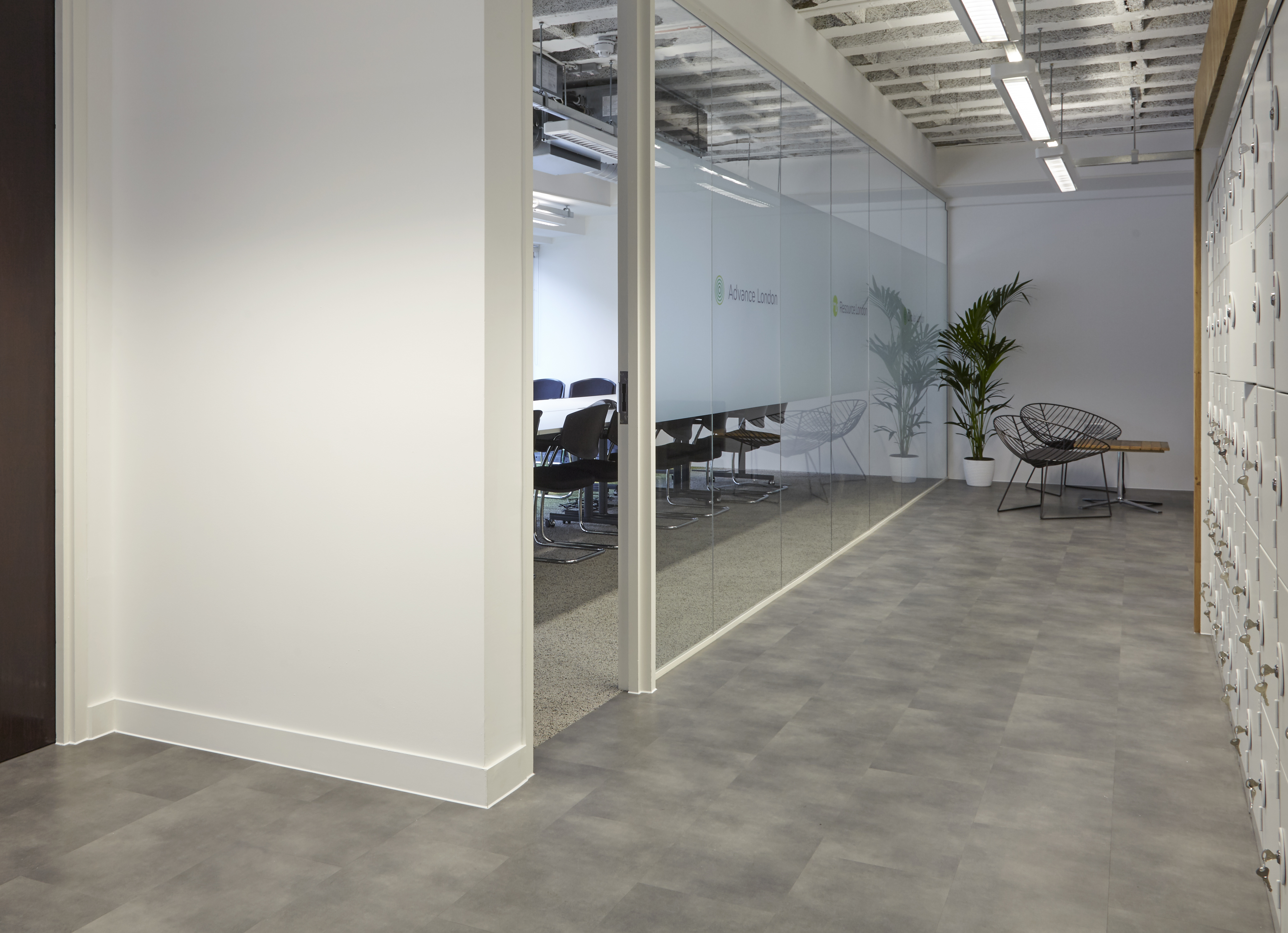
Human Connections combines natural elements with an urban aesthetic
What are your most important considerations when designing carpets?
Above anything else, quality and durability are key. If the flooring doesn’t perform or function how it is supposed to, then it ultimately fails as a product, regardless of how beautiful the design.
For Interface, sustainability and keeping the company moving on its Mission Zero and Climate Take Back journeys are also key considerations.
How much freedom do you have on each project? Or does this depend on the client?
Design freedom very much depends on the client. It’s important to keep a company’s vision in mind at all times. For some clients, that means pushing the envelope on what is expected and challenging the norms of design. For others, it’s more about following trends and delivering something you know their audience will connect with. In this respect, you don’t have to take risks to design a successful product. Instead of thinking about freedom, designers should focus instead on what the client and their audiences want and need.
What are the key factors and trends to take into account when designing flooring in the 21st century?
The ways in which our clients think about design has changed. It is no longer about making a sample carpet tile and simply asking for feedback. Now, a client needs to buy in to the entire design concept and recognise how a design can work in practice.
Product designers will have to create more image mock-ups and renderings to help clients visualise their ideas. This suggests that selling a concept is becoming increasingly important in carpet tile design.
What type of floor would you install if there were no restrictions in terms of budget or anything else? In other words, what is your fantasy floor?
Biophilic and nature-inspired design have proved hugely successful for companies like Interface. To design a carpet with no restrictions would be to create one that works even more like nature than any other existing product. Imagine a carpet that could mimic the ways in which nature operates, with changes from minute to hour, day to night and season to season. Just like nature, the carpet would be constantly evolving. From one moment to another, a shade of grey would change – who knows whether this would happen with the yarn itself or using outside technology. This is cutting-edge design that I’m already seeing architects exploiting, and I’m excited to watch the trend grow.