
Colourful language
Dare to be bold
Which brings us back to one of the fundamental talking points of the day - encouraging corporate clients to embrace an approach to colour that they are unlikely to be familiar with. It is all part and parcel of the designer's job believes Kramer: 'You have to win their confidence and take them on a journey. You can't go leaping in and expect them to just "get it", because it's frightening to the uninitiated. You have to sell the idea and use a lot of reference to your past experience of working with all different kinds of spaces.'
Wasson added: 'If the scheme is at least supported by a neutral then they can often feel more comfortable about it. That way colour can punctuate the rest of the look.'
Hopwood said: 'I agree it is very much a journey, and one that can take a lot of time and effort. That can be very rewarding, but the frustrating part is that you then move on to the next client and you have to start all the way back at the beginning.'

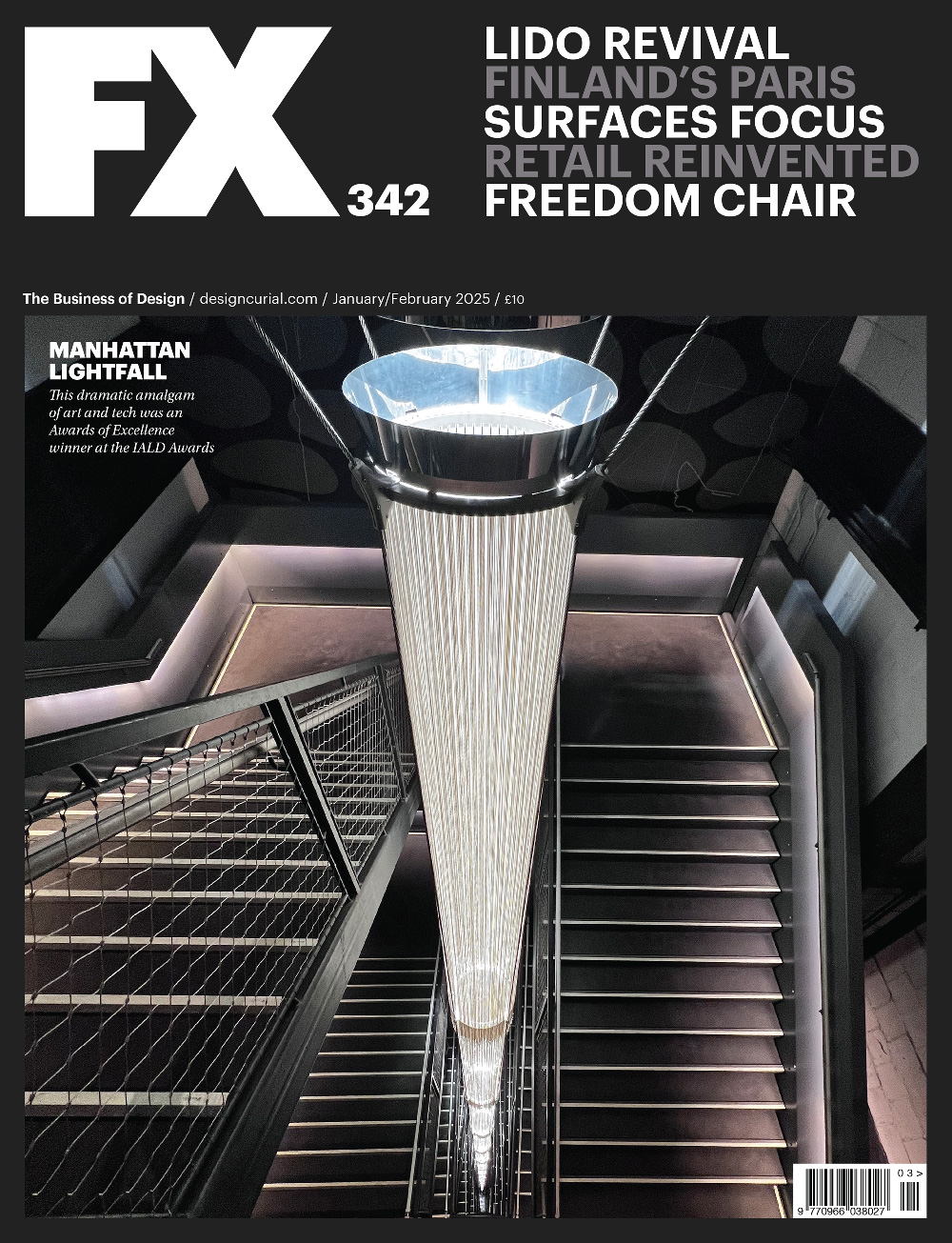
Theresa Dowling, editorial director, FX Magazine
There are nevertheless plenty of reasons to be cheerful for designers working in interiors now, as the scope for being creative is broadening in both commercial and residential schemes, with clients and consumers increasingly prepared to go bold with colour. 'The public is wanting it. They just need direction,' said Hopwood, who appears on BBC2's The Great Interior Design Challenge. He says that people come up to him showing great interest in doing something more ambitious in their own homes. 'But they ask me, "How do you dare to be so bold to use those colours?" The simple answer is that it is just a case of trying it out. A lot of the people on the programme have clearly soaked everything up from magazines so they're copying what they've seen, but at the same time those magazines are a really good vehicle for broadening the mind and boosting confidence in experimenting with colour.'
Tough times for the economy had also focused people's minds less on residential property purely as an asset and more on how it should be a home. Hopwood said: 'Pre-recession it was all about how to make money out of your property and sell it for a big profit. Now, the thinking is less about moving and instead focusing on how to make it a great place to live.'
Against this backdrop, 'upcycling' has become something of a buzzword, but it's not just restricted to the residential sector. Kramer says that references have been cropping up in the commercial sector too, with junk-shop and second-hand items being repurposed for a new life in an office, retail or other business environment. 'It can really change the dynamic in those spaces quite a lot,' he added.
Just like encouraging a client to step out of their comfort zone with colour, it is perhaps another area in which the designer has to help them along the way by putting things into a context that they are more comfortable with. 'I recently had a Russian client who told me that they didn't want anything in their home that was old. She was quite adamant about that point. I said "OK, do you like vintage?" and she replied: "Oh, I love vintage". I guess that has been a great bit of marketing.'